Steam room vs sauna: what is the difference?
A sauna is hot and dry; a steam room is cooler but almost 100% humid. Here is how they differ, how each feels, and which to use first.
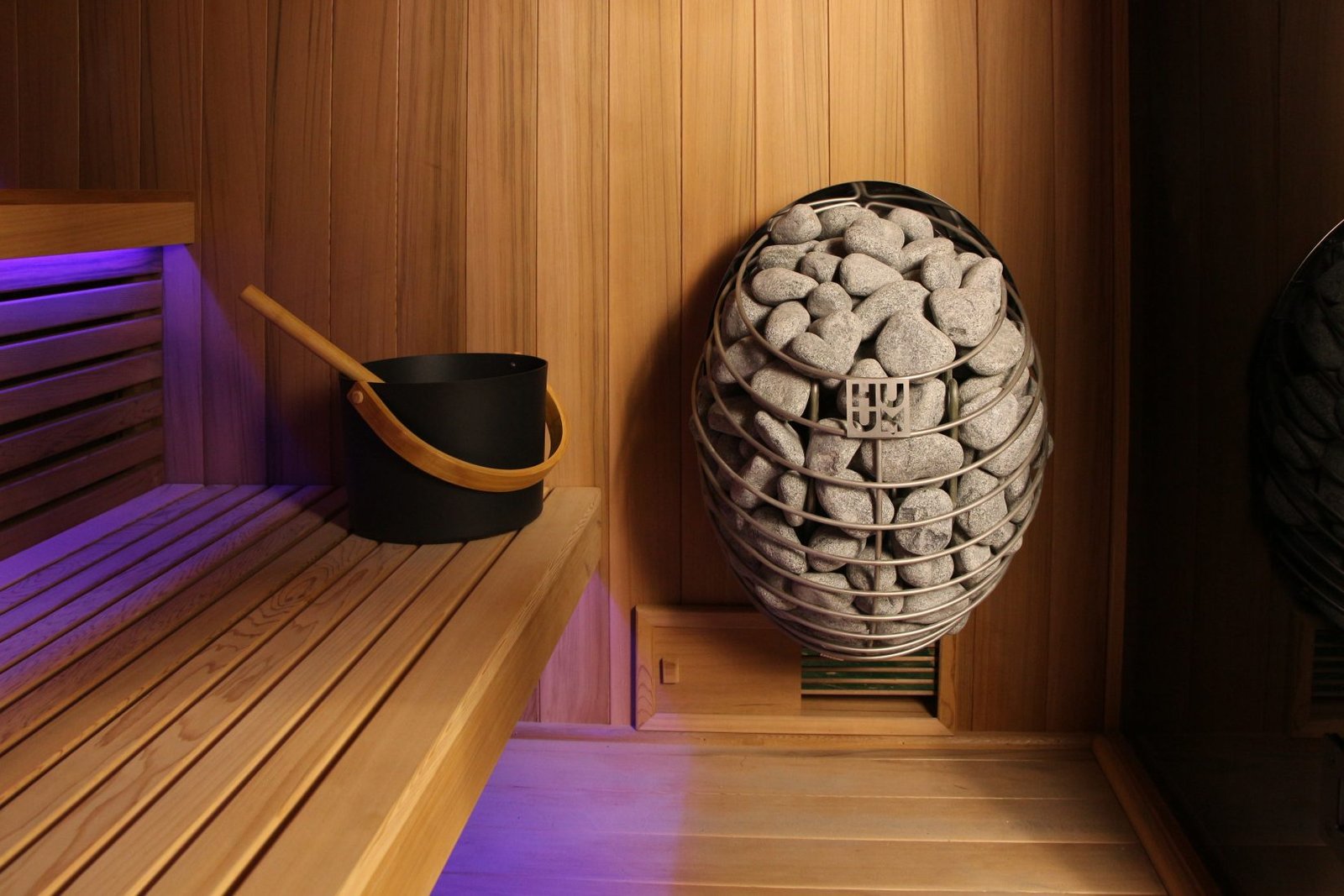
A sauna is a hot, relatively dry room – usually 70–100 °C with 10–20% humidity, or 45–65 °C for infrared. A steam room is cooler, around 40–50 °C, but close to 100% humidity, so the air is thick with steam. Both make you sweat and relax; they simply get there in different ways.
The key differences
| Sauna | Steam room | |
|---|---|---|
| Temperature | 70–100 °C (infrared 45–65 °C) | 40–50 °C |
| Humidity | 10–20%, briefly higher with löyly | Close to 100% |
| Heat source | Heater and stones, or infrared panels | Steam generator |
| Interior | Wood | Tile, glass or acrylic |
| Feel | Dry, intense heat | Wet, enveloping warmth |
| At home | Straightforward to install | Needs a sealed, tiled room, drainage and plumbing |
How they feel
In a sauna, the dry air means sweat evaporates and the heat feels sharp but breathable. Pouring water on the stones (löyly) gives a short burst of humidity. In a steam room, sweat cannot evaporate, so you feel wet almost immediately and the lower temperature can feel just as intense.
Sauna or steam room first?
There is no fixed rule. A common routine is a warm shower, then the sauna, then a cool-down, then the steam room – or the other way round. What matters more is cooling off between rounds, drinking water and listening to your body. Many people also add a cold plunge – see how to combine sauna and cold plunge.
Benefits: what each is good for
Both raise your body temperature, increase heart rate and make you sweat, so many of the reported effects – relaxation, feeling refreshed, easing tired muscles – overlap. The differences come down to the air.
Why people choose a sauna
- Dry, clean heat that many people find easier to breathe in than steam.
- Higher temperatures for a more intense session in less time.
- Control over humidity – pour more water on the stones for steam, or none at all.
- The research base: most long-term studies on heat bathing, including large Finnish studies, looked at traditional dry saunas.
Why people choose a steam room
- Moist air that some people find soothing on the skin and airways.
- A lower temperature, which can suit people who dislike intense dry heat.
- A spa feel – often combined with aromatherapy oils such as eucalyptus.
If you have asthma or another breathing condition, try both carefully: some people find steam easier, others find the humid air harder. Speak to your GP if you are unsure.
How long to stay in each
| Beginners | Experienced | |
|---|---|---|
| Traditional sauna | 5–10 min per round | 10–20 min per round |
| Infrared sauna | 15–20 min | 30–45 min |
| Steam room | 5–10 min | 10–15 min |
Leave straight away if you feel dizzy, light-headed or sick. Drink water before and after, and skip alcohol.
Sauna and steam room etiquette
- Shower before you go in.
- Sit on a towel in the sauna – it protects the wood and is more hygienic.
- In a shared sauna, ask before pouring water on the stones.
- Keep conversation low; many people use the time to switch off.
- No phones – heat and steam are bad for electronics too.
Cost to install at home
A home steam room is usually a building project: tanking and tiling a room, a ceiling that slopes so condensation does not drip, a steam generator, a drain, and an extractor fan. Costs depend heavily on the room and the trades involved, and it ties up a bathroom or shower space.
A home sauna is a self-contained product. You buy the cabin, prepare a base and power supply, and assemble it – a fixed price you know up front. Many of our customers who considered a steam room chose a sauna because it was simpler, quicker and could go in the garden rather than taking over a bathroom.
Gym and spa: making the most of both
If your gym or spa has both, a balanced session might look like this:
- Warm shower.
- Sauna for 8–12 minutes.
- Cool shower or plunge pool for 30 seconds to 1 minute.
- Rest for 5 minutes with water.
- Steam room for 8–10 minutes.
- Cool shower and a longer rest.
Keep the total heat time to around 30 minutes until you know how your body responds.
What about an infrared sauna?
An infrared sauna is a third option: dry like a sauna but cooler, at 45–65 °C, because infrared panels warm your body directly rather than the air. It heats up in about 15 minutes and is the cheapest type to run – see infrared sauna benefits and sauna running costs.
Which is easier to have at home?
A sauna, by some distance. A steam room needs a fully waterproof tiled space, a steam generator, drainage and good ventilation. A sauna is a self-contained wooden cabin: an indoor sauna assembles in hours and a garden sauna needs only a level base and power.
Want to decide between infrared and traditional? Read infrared vs traditional sauna.
Frequently asked questions
Is a sauna or steam room hotter?
A sauna is hotter (70–100 °C) but drier. A steam room is around 40–50 °C with nearly 100% humidity, so it can feel just as intense.
Should I use the sauna or steam room first?
There is no fixed rule. Many people start with the sauna, cool down, then use the steam room. Cool off and drink water between rounds.
Can I have a steam room at home?
Yes, but it needs a waterproof tiled room, a steam generator, drainage and ventilation. A home sauna is much simpler to install.