Home ice bath guide: chiller vs no chiller, costs and setup
Thinking about an ice bath at home? We compare inflatable tubs, ice-filled baths and chilled cold plunges – plus running costs, water care and where to put one.
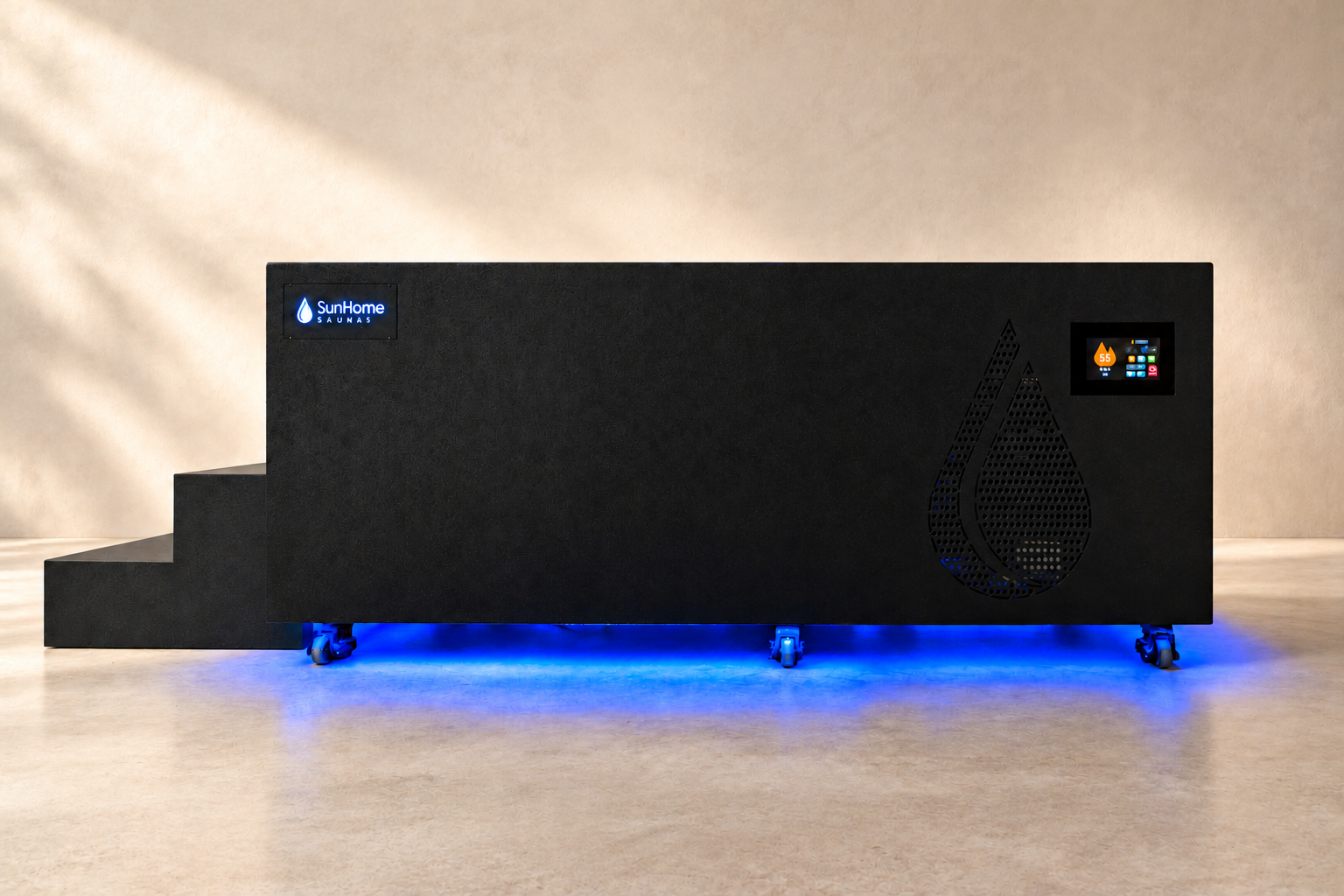
The main choice is between an ice bath without a chiller (an inflatable or rigid tub you fill with cold water and ice) and a chilled cold plunge tub that cools and filters the water automatically. A tub without a chiller is cheap to buy but needs ice and frequent water changes. A chilled tub costs more but is ready at the temperature you choose, every day.
Your options
| Inflatable / basic tub | Chilled ice bath | |
|---|---|---|
| Temperature | Depends on tap water and ice | Set and held, down to around 0 °C |
| Ice needed | Yes, bags every session in summer | No |
| Filtration | No – change water often | Filter plus ozone/UV |
| Water changes | Every few days | Every 1–3 months |
| Durability | Limited | Built for years of use |
Is a chiller worth it in the UK?
UK tap water is often 10–15 °C in winter but can reach 18–20 °C in summer – which is exactly when ice bath searches peak. Without a chiller you will be buying ice through the warmer months. With a chiller, the water is at your chosen temperature whenever you want it, so you are far more likely to keep the habit going.
What to look for in a home ice bath
- Chiller power and lowest temperature: can it reach the temperature you want in a UK summer, not just in winter?
- Heating mode: some chillers can also warm the water, useful for year-round use or as a warm soak.
- Filtration and sanitation: a proper filter plus ozone or UV means fewer water changes.
- Insulation and lid: lowers running costs and keeps leaves and debris out.
- Size and position: upright tubs suit one person and small spaces; horizontal tubs let you lie back and suit two.
- Outdoor rating: UV-resistant materials and a weatherproof chiller if it will live outside.
- App and controls: set the temperature and schedule from your phone.
- Warranty: check cover on the chiller specifically – it is the most complex part.
Upright or horizontal?
An upright tub takes less floor space and lets you sit with water up to your shoulders – good for one person and a small patio. A horizontal tub is longer, so you can lie back and stretch out, and some fit two people. Our Cold Plunge Performance comes in both versions.
How to use your ice bath
Start with 30 seconds to 2 minutes at 10–15 °C, enter slowly and breathe out long and steady. Build up gradually over weeks. Never plunge alone when you are new to it, and speak to your GP first if you have a heart condition, high blood pressure, Raynaud’s or are pregnant. Our contrast therapy guide has a full routine.
Running costs
A chiller cycles on and off to hold temperature. Costs depend on how cold you keep it, the air temperature and whether the lid is on, but are typically a few pounds a week. Using the insulated lid and keeping the tub out of direct sun makes a big difference. Compare with sauna running costs.
Water care
- Keep the lid on when not in use.
- Rinse off before you get in.
- Clean or replace the filter as recommended.
- Change the water every 1–3 months depending on use.
Budgeting for a home ice bath
Beyond the tub itself, plan for:
- a level, solid base – paving, decking rated for the weight or a concrete pad (a filled tub can weigh 400–700 kg)
- a weatherproof outdoor socket fitted by an electrician, if there is none nearby
- replacement filters and water treatment
- electricity for the chiller, typically a few pounds a week
Prices for our models, including VAT and delivery, are on each product page and in your quote.
Where to put it
Indoors (garage, gym) or outdoors on a level, solid base, close to a weatherproof outdoor socket installed by an electrician. Leave room for access to the chiller unit. Placing it next to a sauna lets you do contrast therapy.
Our ice baths
- Cold Plunge Performance – vertical 1-person or horizontal 2-person, chills to about 0 °C.
- Cold Plunge Pro – can go below freezing, with UV sanitation and app control.
See all ice baths and cold plunge tubs.
Frequently asked questions
Do I need a chiller for an ice bath?
Not strictly, but without one you will need ice in warmer months and frequent water changes. A chiller keeps the water at your set temperature and filtered.
How cold should a home ice bath be?
Beginners often start at 10–15 °C. Experienced users may go to 3–5 °C or lower.
How often should I change ice bath water?
With filtration and sanitation, every 1–3 months. Without, every few days.